
Why Digital Humans in Education?
Students do not stop needing support when a class ends. They may want to practice a new language, clarify a course requirement, prepare for an exam, or work through a difficult concept at night, over the weekend, or from another time zone. Yet providing qualified teachers, tutors, and advisors on demand is difficult and expensive.
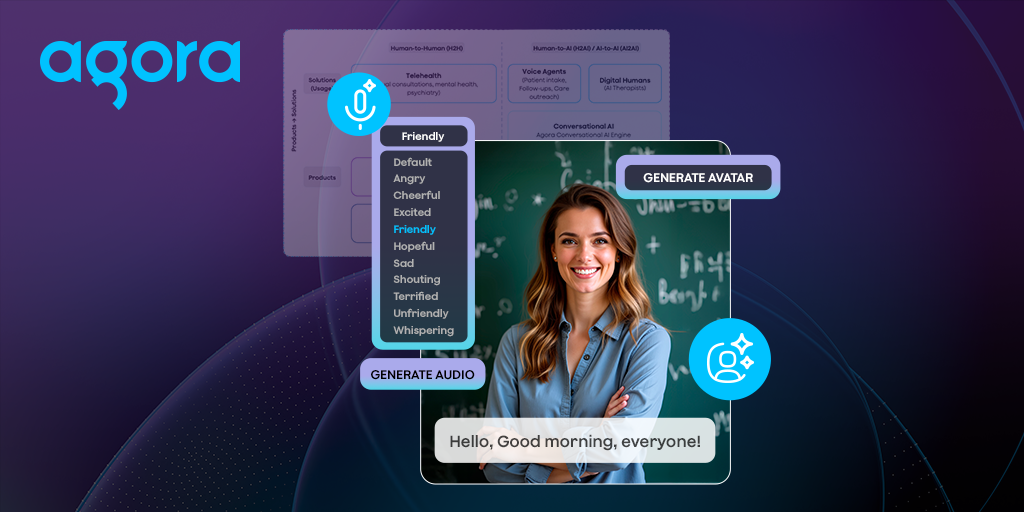
AI-powered avatars, also known as digital humans, can help education providers extend the reach of their existing teams. They can give students a conversational way to practice skills, navigate approved course information, prepare for assessments, and receive routine guidance at any hour—while referring complex, sensitive, or high-stakes needs to a human educator or advisor. For educational institutions and EdTech platforms, this creates a way to make support more responsive and personal without requiring headcount to grow at the same rate as demand.
What makes those experiences possible isn’t a single AI model. Every AI avatar is built from several specialized technologies working together in real time. Integrating those layers and keeping them working together takes ongoing maintenance. A change or failure in one service can affect the entire conversation, and every step can add latency.
That’s why building a great AI avatar is about creating a real-time system where every component stays synchronized. In this article, we’ll break down the three core layers behind modern AI avatars and explain how a real-time infrastructure and orchestration layer coordinates the cascading loop to create a seamless real-time conversational experience.
Layer One: The Speech and Text Layer
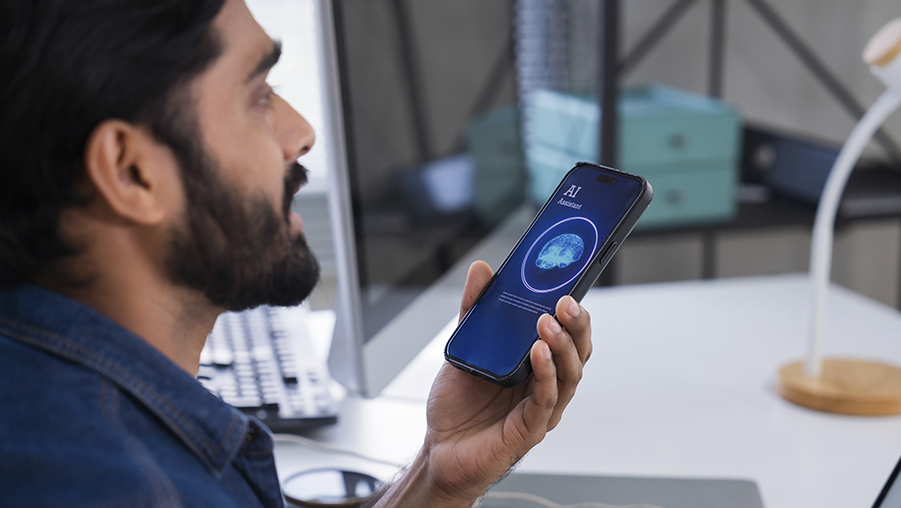
Every conversation starts with a voice. Before an AI avatar can respond, it needs to understand what the student is saying. That begins with automatic speech recognition (ASR), which converts spoken language into text the language model can process. Once the model generates a response, text-to-speech (TTS) transforms that response back into natural, expressive audio.
For education, AI avatars need both speed and accuracy. Students pause to think, change direction mid-sentence, and ask follow-up questions before they’ve finished their original thought. The voice layer must keep up without slowing the conversation or missing important context.
The quality of the synthesized voice is also important. For example, a tutoring assistant explaining a difficult concept should sound different from a language coach helping a student practice pronunciation. Natural pacing, emphasis, and tone all contribute to a more engaging learning experience.
The real-time voice interaction layer lays the foundation for every interaction, but it doesn’t decide what to say. That’s the job of the language model. Newer real-time models, such as Gemini 3.8 Live, combine audio interaction with language processing to support faster, more natural conversations. The layers described here follow a common cascading architecture; real-time models can combine some of these functions within a single model.
Layer Two: The LLM (The Brain)
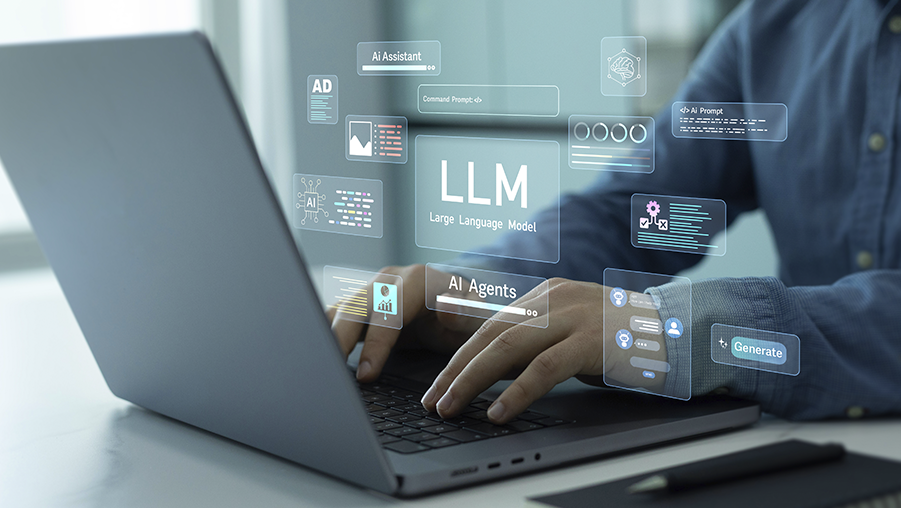
Once the voice layer captures a student’s question, the language model takes over. The language model interprets intent, maintains context, and decides how to respond. Depending on the application, this could be a fine-tuned large language model (LLM) or a domain-specific small language model (SLM). Instead of treating every question as a new request, it keeps the conversation moving. If a student asks a follow-up question or wants a different explanation, the model can build on what was already discussed instead of starting from scratch.
That context is crucial in education. Whether a student is practicing a new language or working through a math problem, learning happens through back-and-forth conversation. The more naturally an AI avatar can guide that dialogue, the more valuable it becomes as a teaching tool.
General-purpose language models, however, have limits. They aren’t trained on your institution’s curriculum, student handbook, or campus policies. Left on their own, they may generate convincing answers that aren’t true.
That’s why many educational platforms use retrieval-augmented generation (RAG). Instead of relying only on the model’s training data, a RAG pipeline retrieves information from approved sources, such as course materials or internal knowledge bases, and supplies that context before the model generates a response.
For example, if a student asks about course prerequisites or graduation requirements, the AI avatar can reference the university’s published information instead of providing a generic answer. The same approach works for admissions, financial aid, campus resources, and tutoring content.
Institutions also have the flexibility to choose the AI model that best fits their application. Some may prioritize reasoning, while others focus on cost, data residency, or fine-tuning for a specific subject. Because the AI layer is independent of the real-time communication layer, teams can evaluate new models without redesigning the rest of the application.
Layer Three: The Graphical Layer (The Avatar)

The avatar is the most visible part of the stack. An AI avatar is a real-time rendering layer that transforms speech into facial expressions, lip movements, and gestures that match the conversation. When everything stays synchronized, the interaction feels natural. When it doesn’t, students notice it immediately. Visual design also depends on the experience you’re trying to create:
- A language learning platform might choose a friendly conversation partner
- A university could build an admissions guide that reflects its brand
- Another college might create subject-specific tutors with distinct personalities
That doesn’t always mean aiming for the most photorealistic avatar. More realistic graphics often require additional processing, which can introduce delays. In conversation, responsiveness is usually more important than visual fidelity. Students are more likely to notice awkward pauses or out-of-sync speech than subtle differences in facial detail.
The best avatar and Face AR partners create avatars that strike a balance. They look believable enough to keep students engaged while remaining responsive enough to support natural conversation.
The Missing Piece: Real-Time Orchestration
At this point, every major component is in place. The system can listen, reason, speak, and respond visually. The remaining challenge is making those components behave like a single application instead of a collection of independent services. Every service in the stack adds integration and uptime complexity, as well as potential latency:
- Speech recognition needs time to process audio.
- The LLM generates a response.
- TTS creates natural audio.
- The rendering engine animates the avatar.
While each delay may seem small, together they can disrupt the flow of a conversation. Small technical issues transform into noticeable user experience problems. Even though students don’t think about latency, they know when something feels off.
Real-time orchestration keeps every layer working together. Instead of treating speech recognition, reasoning, synthesis, and rendering as separate services, it coordinates them as one conversational pipeline, resulting in synchronized audio and visuals, natural interruptions, and quick responses.
Orchestration also removes much of the complexity of integrating multiple AI services. You don’t have to build custom logic to manage every interaction between vendors, and your team can focus on improving the learning experience.
How Agora Brings the Stack Together for Education
Agora provides the real-time infrastructure that connects best-in-class AI models. Institutions can choose the LLM, ASR, TTS, and rendering technologies that best fit their needs while Agora coordinates the flow of audio and video between every layer.
Behind the scenes, Agora Conversational AI Engine helps keep the conversation synchronized. Features like voice activity detection, interruption handling, and audio and video synchronization allow the avatar to react naturally as conversations change direction. Students can ask follow-up questions, interrupt when they need clarification, or pause to think.
Our platform is also model-agnostic. Whether your application uses OpenAI, Anthropic, Google Gemini, or an open-source model, Agora works alongside your preferred AI providers rather than locking you into a single system.
As deployments grow, the infrastructure grows with them. Agora’s Software-Defined Real-Time Network (SD-RTN) maintains low-latency performance across regions, helping educational institutions deliver consistent experiences as usage scales.
Build AI Avatars That Feel Like Real Conversations
AI avatars are giving educational institutions new ways to expand tutoring, advising, and student support without sacrificing the personal interactions students value. Instead of replacing educators, they extend access to meaningful conversations wherever students need them.
Creating that experience takes a powerful language model working in sync with speech recognition, reasoning, voice synthesis, avatar rendering, and real-time communication. That’s the role Agora plays. By providing the real-time infrastructure that connects every layer of the AI stack, Agora helps developers build responsive conversational experiences that are flexible and ready to scale.
Whether you’re building a virtual tutor, an always-on academic advisor, or a conversation partner for language learning, our platform provides the foundation for delivering natural voice and video interactions with the AI models and avatar technologies of your choice. Ready to start building? Explore our Conversational AI Engine, browse our developer documentation, or get started for free to see how real-time orchestration can accelerate your next AI avatar project.


